ACCEM logo
Providing disaster information & resources
American Flag Image
Home Hazards Prepare Plans Training Links

Mormon Crickets

Valid HTML 4.01!

Valid CSS!

Disaster image

Hazards

Ada County, located in the southwestern part of Idaho, is one of 44 counties in the state. Home to almost one quarter of the state's population, the county is approximately 1,055 square miles in area. The incorporated cities of Boise, Eagle, Garden City, Kuna, Meridian, and Star, occupy around 11% of the land area in the county.

Every community is at risk from certain hazards. This page contains information on the types of hazards that Ada County citizens may face. Hazards may also be ranked by frequency and magnitude. You may obtain additional information on hazards and risks in this area by contacting Ada City-County Emergency Management at 577-4750.


DROUGHT AND EXTREME HEAT - Most croplands in Ada County are irrigated. Prolonged drought, two or more winters of below normal precipitation combined with extreme summer heat, may cause reduced irrigation quotas resulting in some crop loss. Range fires, which will be discussed in another section, pose the greatest danger from drought and extreme heat. According to the National Weather Service the average high temperature for Ada County during July and August is 91F.


EARTHQUAKES - The Federal Emergency Management Agency has ranked Idaho as the 5th highest in the nation for earthquake risk after California, Alaska, Nevada and Utah. Idaho has experienced two of the largest earthquakes in the lower 48 states in the last 40 years. In 1959, Hebgen Lake experienced a quake that measured 7.5 on the Richter scale and in 1983 the Borah Peak quake measured 7.3. Most of present day Boise was built without much consideration of seismic factors. Since 1988 all buildings in Idaho have been required to conform to the Uniform Building Code (UBC). The UBC designates different earthquake hazard zones (Zones 0-4), and within each zone different building design and construction features are required to ensure earthquake resistance. UBC seismic zone ranking for Ada County is 2b - moderate. Some areas in Idaho are ranked 3 - high.


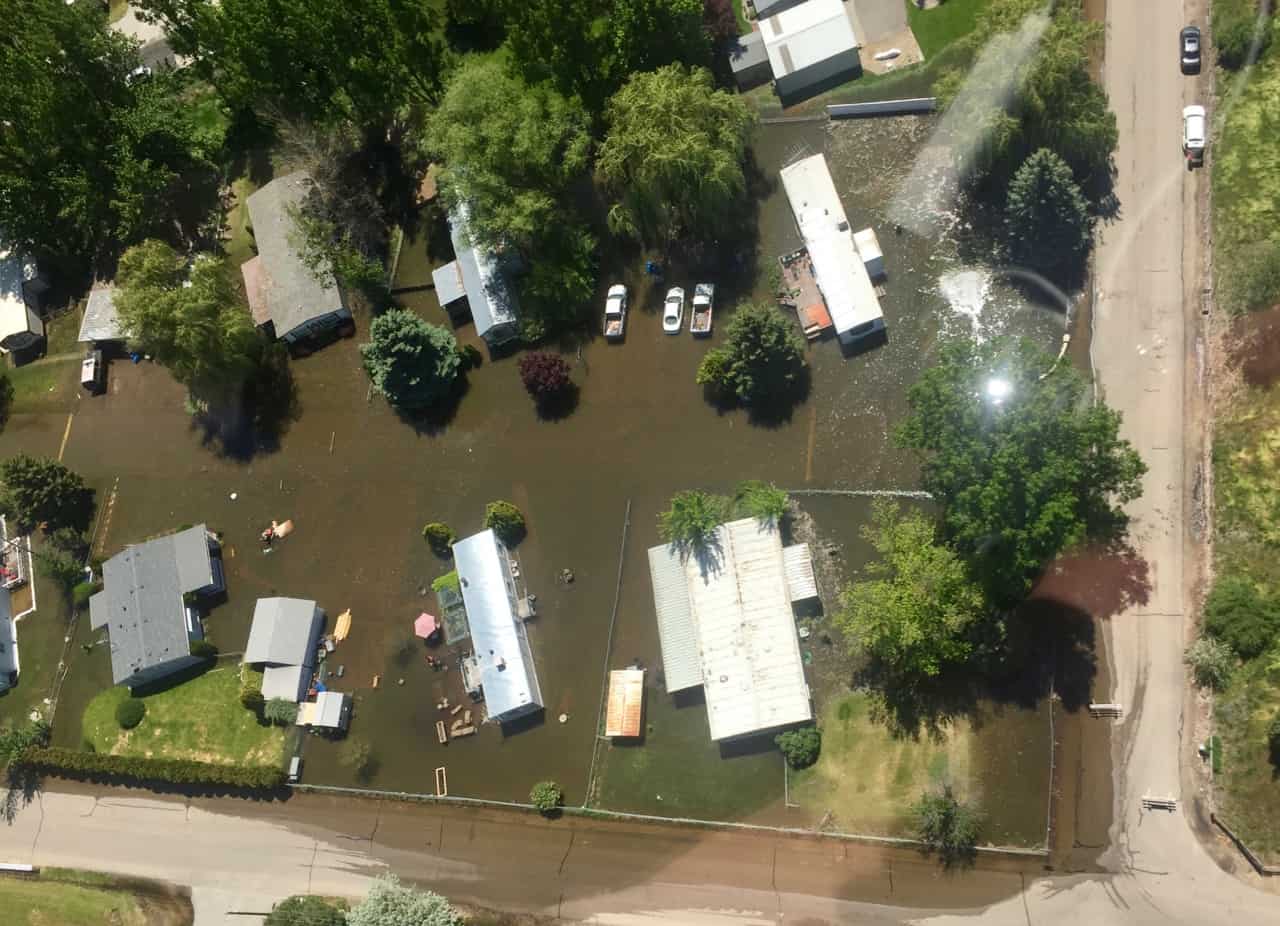
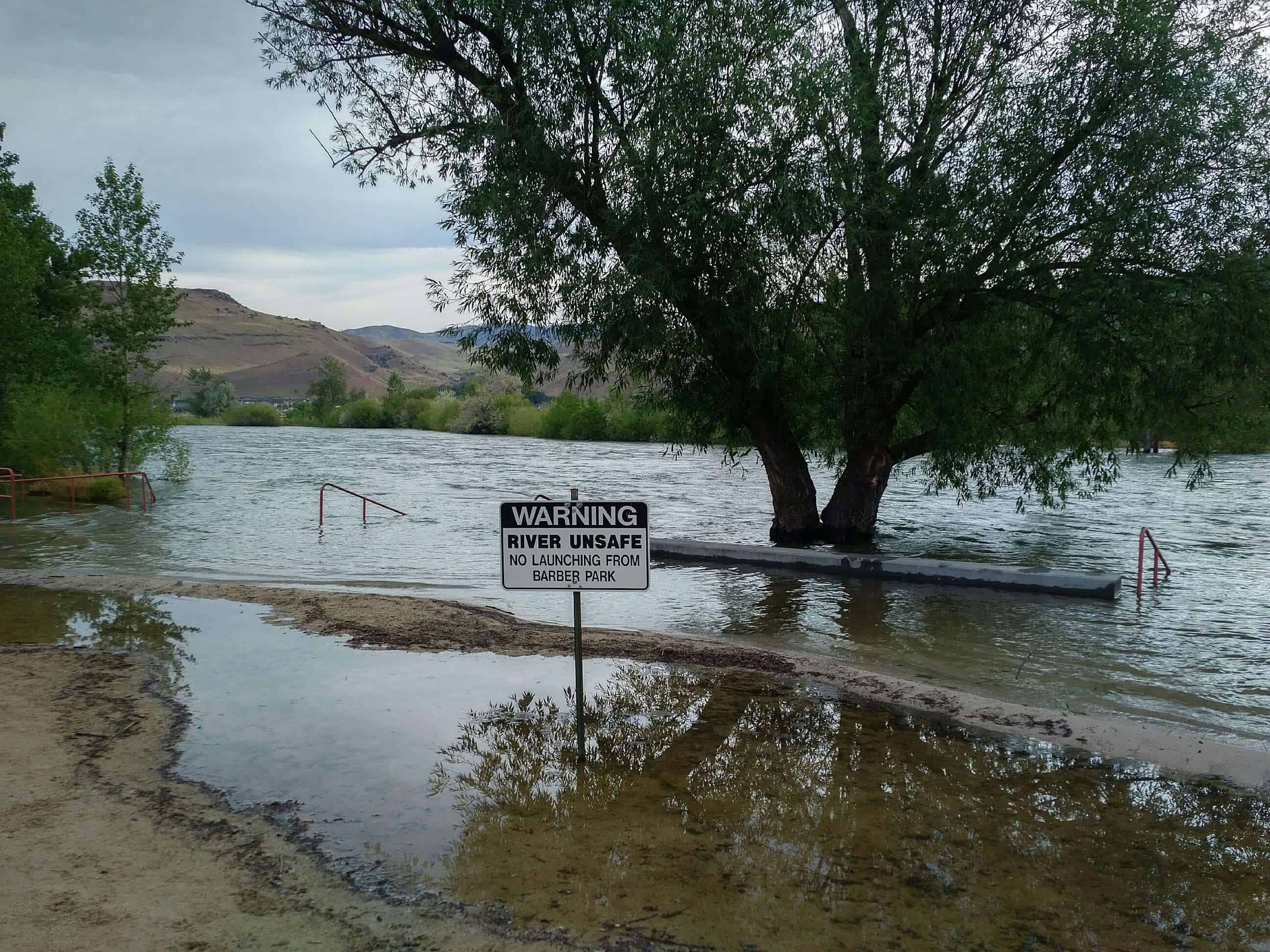
FLOODS AND FLASH FLOODS - The last time the Boise River experienced the 100-year flood was 1943. Historically the Boise River reaches flood stage every year on the stream gage located at the Glenwood Bridge. This results in some minor inconvenience and damage each time it happens. Continued encroachment and development in the river floodway aggravates this situation. Future floods above 10,000 cfs will result in substantial additional expense to the community. Sewage movement and processing may be curtailed or completely stopped for sections of Boise and Garden City.

Boise River Flood Stage - 7,000 cubic feet per second (cfs)
Boise River 100-Year Flood - 16,600 cfs
100-Year Flood - a flood that has a 1% chance of occurring in any given year

Three out of every five years certain creeks and gulches in Ada County also pose a threat. The highest risk drainages include Seaman, Pierce, Polecat, Stuart, Crane, and Hulls Gulches, and Cottonwood Creek. The 100-year flood on Cottonwood Creek would put the flow at 7,200 cfs. Existing channels are inadequate to carry sudden large flows in many areas of dense development.

In 1996 a wildfire burned much of Stuart, Crane, Hulls and Cottonwood gulches. The flash flood and debris flow potential was therefore greatly increased on these drainages. Since then much of the vegetation has returned and the flood threat is just about what it was before the wildfire. In 2005 the Squaw Creek watershed was burned, raising the potential for flash floods and debris flows.

Upstream from the city of Boise there are three large dams. Lucky Peak and Anderson Ranch are earth-filled dams, and Arrowrock is a concrete dam. These dams hold just under a million acre feet of water. Anderson Ranch and Arrowrock dams are administered by the U. S. Bureau of Reclamation, while Lucky Peak Dam is administered by the U. S. Army Corps of Engineers.


HAZARDOUS MATERIALS - Hazardous materials incidents present the most likely technological hazard in the county. Hazardous materials, including agricultural chemicals, are commonly produced, stored, and used in Ada County. Hazardous chemicals are found in hundreds of facilities in the county; many facilities have at least one Extremely Hazardous Substance. Hazardous materials are also routinely transported over the county's 200 state and 1,500 local roadways, hundreds of railway and pipeline miles, and through the Boise Air Terminal. Over a dozen facilities in the county have radioactive materials licenses.


STORMS - THUNDERSTORMS, ELECTRICAL STORMS, TORNADOES - Thunderstorms, large quantities of rain, hail, lightning, high winds, and tornadoes are all events that occur in Ada County. In addition to their direct effects, these storms may also cause secondary problems such as loss of utilities, automobile accidents due to low visibility, and flash floods.

Thunderstorms - The large amount of water associated with thunderstorms may result in flash flooding along tributaries of the Boise River. Each year an average of two to five incidents of thunderstorm related damage is recorded in Ada County.

Electrical Storms - Power outages and other damage from lightning strikes occur annually. The inconvenience caused by power outages is usually confined to residents of the affected neighborhood.

Tornadoes - Along the Snake River Plain, from Idaho Falls to Weiser, an average of one or more tornadoes or funnel shaped clouds are reported each year.


TERRORISM - Terrorism is usually defined as the use or threat of force to affect political or social change. A terrorist attack may be domestic in origin, for example the Oklahoma City bombing of 1995, or international, such as the attack on the U. S. Homeland on September 11, 2001. Additionally terrorism may take many forms including attacks with biological or chemical weapons, or radiological materials. The most common attacks are those involving armed assailants or explosives.


WILDFIRES - Ada County is subject to range fires every year that destroy forage and ground cover. Most fires are confined to an area of less than 500 acres. Approximately half of these fires are caused by dry lightning storms, with the other half being human actions or undetermined causes.

In 1992 five lightning fires combined to blacken 257,000 acres of rangeland in and around Ada County. Vulnerability is steadily increasing as more dwellings are constructed in the foothills adjacent to range lands.

In July of 1994 a range fire with wind gust of over 40 miles an hour took the lives of two Kuna firefighters.

On August 26, 1996 a human caused wildfire was ignited in the Boise foothills. The temperature was 104 degrees and the winds reached 30 mph. On September 2, the fire was contained after burning 15,300 acres of land.


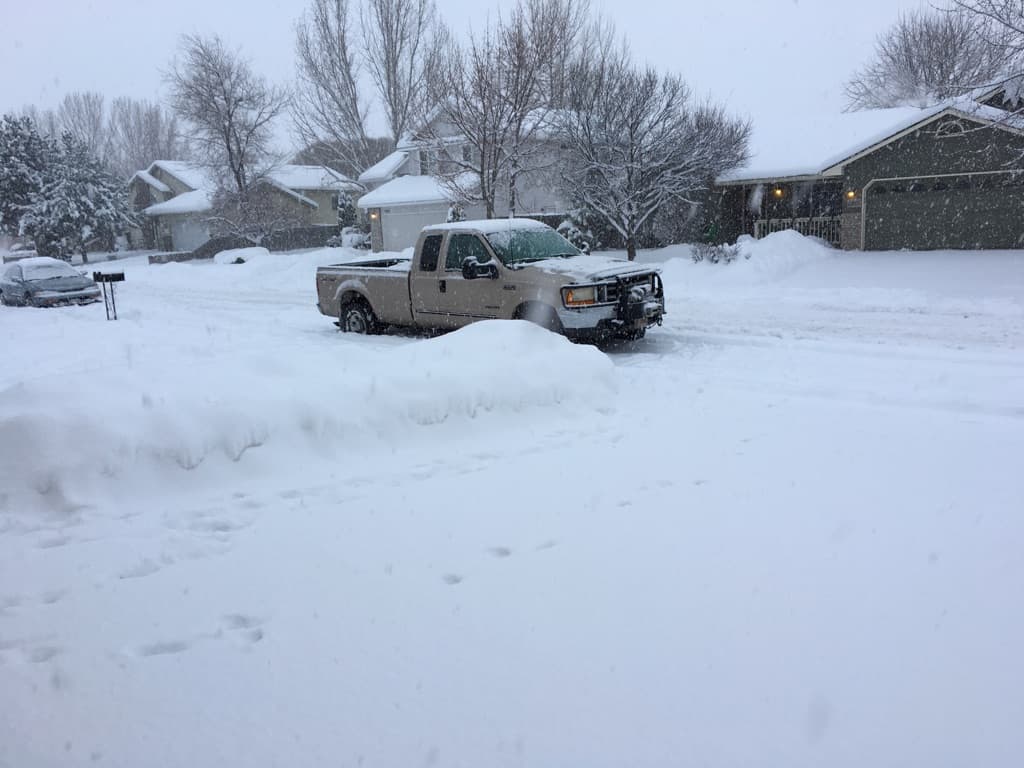
WINTER STORMS/ FREEZING - A winter storm will have one or more of the following weather elements: blizzard conditions, heavy snow, accumulations of freezing rain/drizzle, and/or heavy sleet. A blizzard is a storm lasting about 3 hours or longer with winds of 35 mph and considerable falling and/or blowing snow frequently reducing visibilities to less than 1/4 mile. The havoc caused by blizzards is generally on a smaller scale since roads are not universally closed, and winds involved usually subside more quickly than snow melts. Blizzards occur an average of once every ten years in Ada County. Freezing is an expected winter weather event. Freezing is most hazardous when it is associated with a severe snowstorms, blizzards, or power outages. Prolonged freezes occur about once every 12 years.


OTHER POTENTIAL RISKS - In addition to the hazards discussed above other potential hazards include: crop loss/damage, utility failure, explosions, civil disorder, and transportation accidents. These risks are not considered major threats to the Ada County area. The probability of these events occurring and affecting a large percentage of the population is less than the previously mentioned events.


Serving Ada County, Ada County Highway District, Boise, Eagle, Garden City, Kuna, Meridian, & Star.